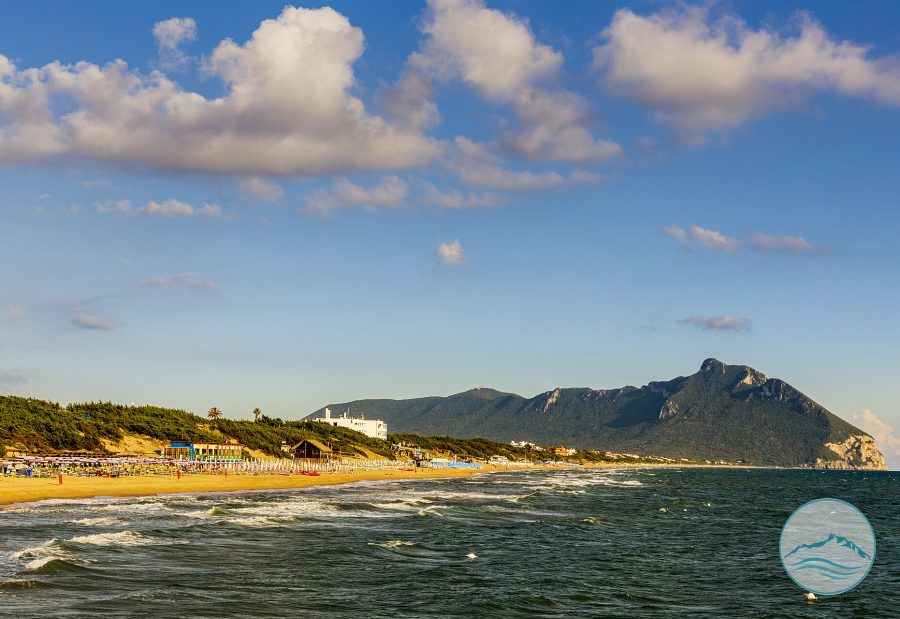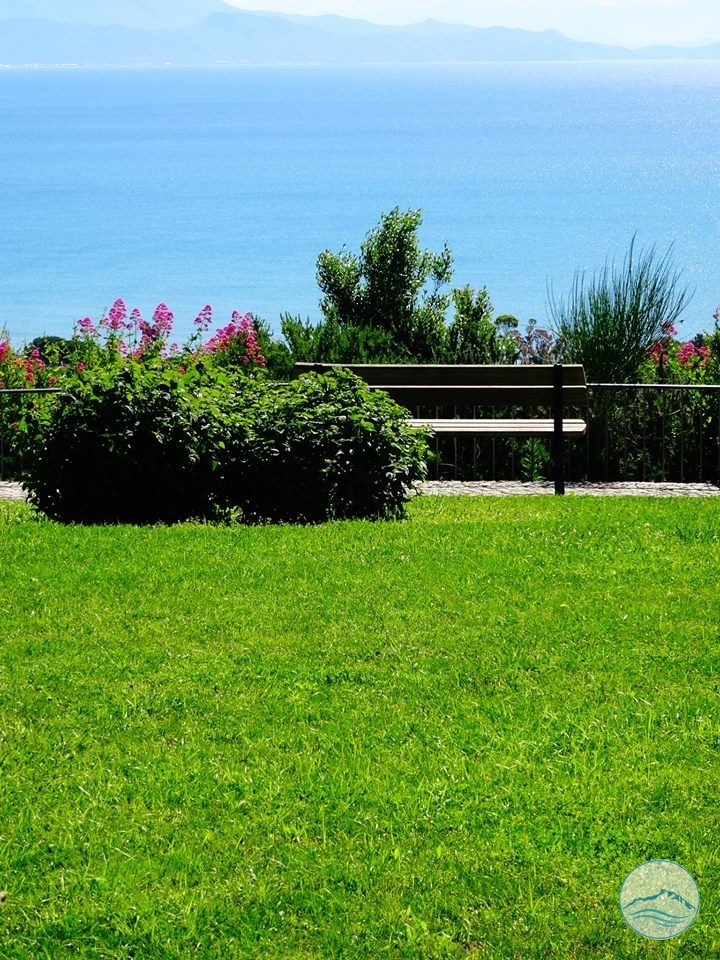
On 4 June 2005 “Vigna la Corte” was inaugurated. A restoration project made this area safe and redeveloped it superbly, creating a garden where Circeo residents and tourists can stroll and relax. Vigna la Corte, named after its oldest use as the court (corte) of the Baronial Palace, overlooks the Gulf of Terracina in the Tyrrhenian Sea. On particularly clear days, looking from north to east, you can admire the Lepini-Ausoni-Aurunci mountain range, on whose slopes stand the towns of Sezze, Priverno, Roccasecca dei Volsci and Fossanova. Looking on towards Terracina, the distinctive cut in the cliff called “Pisco Montano” stands out, followed by “white” Sperlonga and Gaeta, which hides Formia and Minturno, until you glimpse Naples with the small island of Procida and, behind, the outline of Vesuvius. Out at sea you can see the islands of Ischia, Ventotene, Ponza and Palmarola. The island clearly closest to us is Zannone, included in the Circeo National Park in 1979.
The plain of the Agro Pontino, now visibly farmed and an active part of the local economy, was once “covered” by the Forest of Terracina, of which a strip of forest survives thanks to the creation of the Circeo National Park. The small hill in the foreground, looking north, is Monticchio.
The Garden is laid out on two terraces. We are welcomed by olive trees, planted when the garden was created, and bushes of lantana (Lantana camara), a typical garden and house plant native to tropical America, like many other species now very common in public parks and private gardens. Considered invasive, lantana mainly colonises land disturbed by human activity! Deciduous, in spring it puts out many shoots that soon reach a metre in height. Its distinctive tubular flowers, gathered in clusters, start blooming in spring and continue all summer, changing colour as the days pass (white, yellow, brick red). They are followed by the fruits, small dark berries that are toxic, like the plant. Insects love it, and you will often see butterflies feeding on its nectar. Its name recalls the native Viburnum lantana, which has very similar leaves. Going down the path you come across pomegranates and rose bushes in the most unusual colours. The pergola with the vine recalls the area’s ancient use and the renowned Moscato di Terracina, a grape used to make a DOC white wine. Its name recalls its intense scent and sweet aroma reminiscent of musk (“muscum”), and the vineyards that once coloured the slopes of the promontory.
Alongside the vineyards there were also many orchards, like the lemon trees at the end of the pergola. The slope has been replanted with species typical of this environment, the Mediterranean scrub: myrtle, mastic, Spanish broom and rosemary, including the creeping variety. A hedge of these species leads to the second terrace, with a small grove of carob trees (Ceratonia siliqua). This plant originates in the eastern Mediterranean; in Italy it grows mainly on the southern coasts and the islands. It is massive in appearance, with an often twisted trunk and evergreen, compound, even-pinnate leaves that are leathery and a deep green. Its flowering is unusual: small greenish-yellow flowers in drooping clusters grow from the leaf axils from late spring to late autumn. The fruit is perhaps more striking and better known as the “carob”, a brown, flattened, slightly curved pod up to 20 cm long. The carob is edible: the plant was already grown by the Romans, who appreciated its sweet taste and nutritional value. Today carob is grown mainly in Sicily and Apulia; animals love the fruit too, and it is still used in animal feed – hamsters and horses adore it!