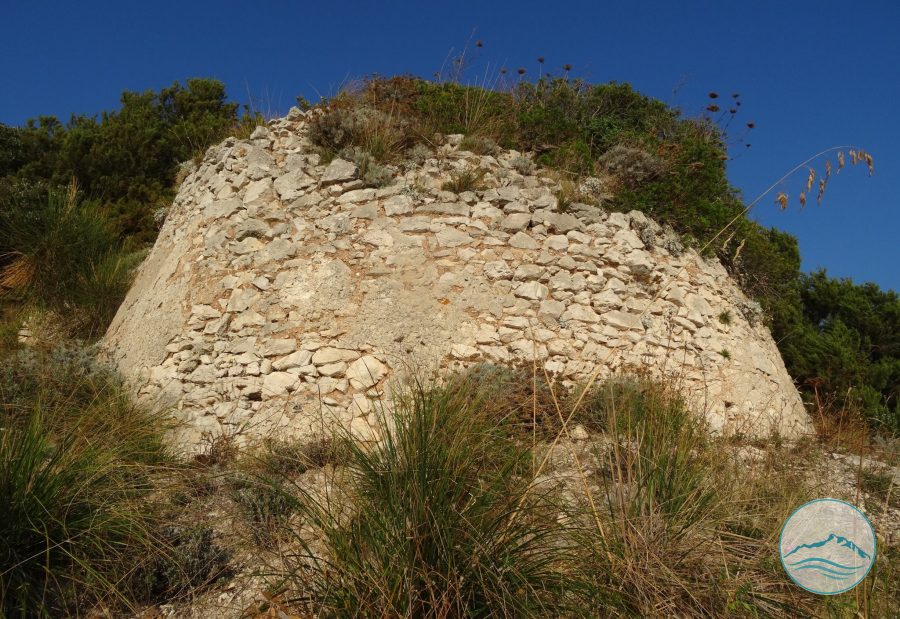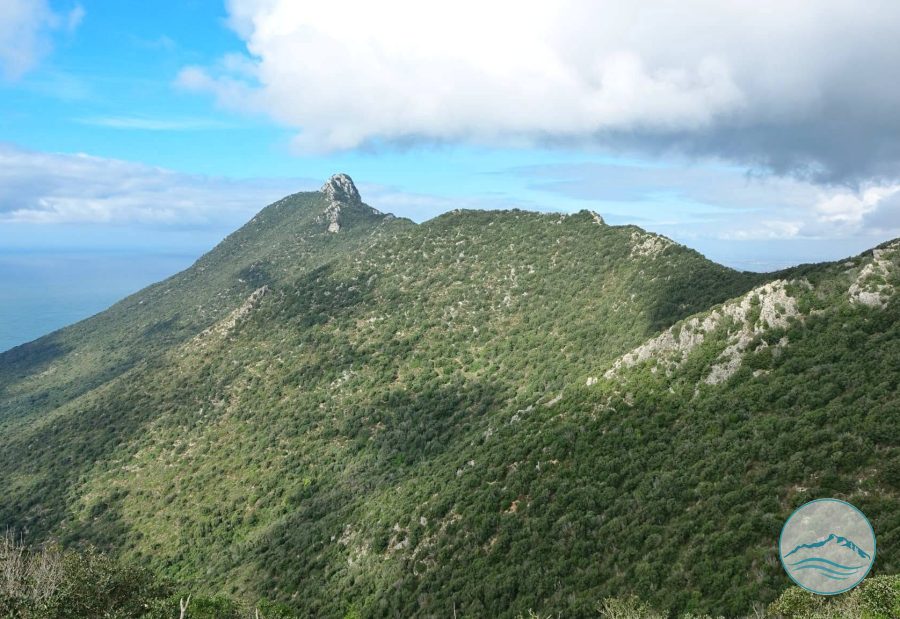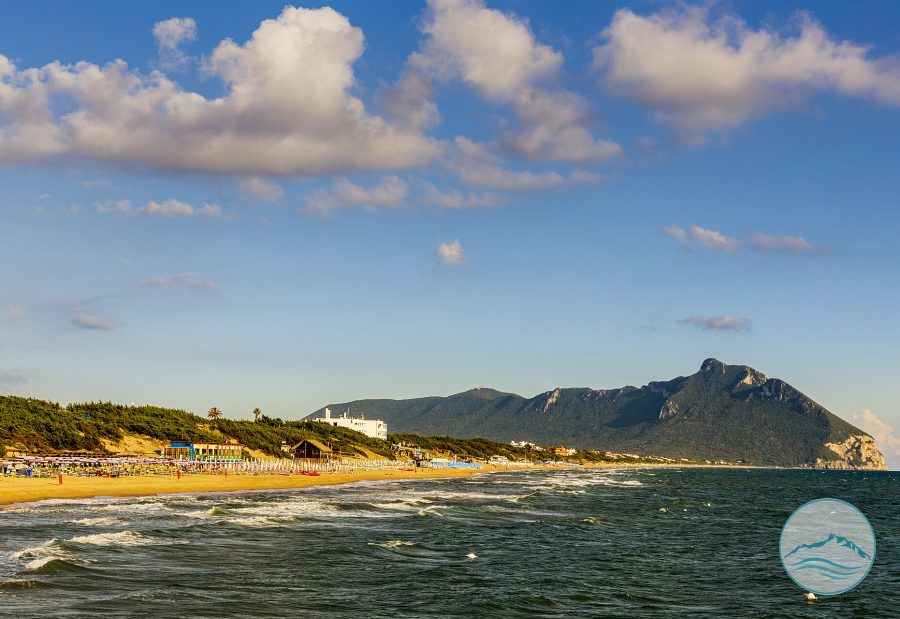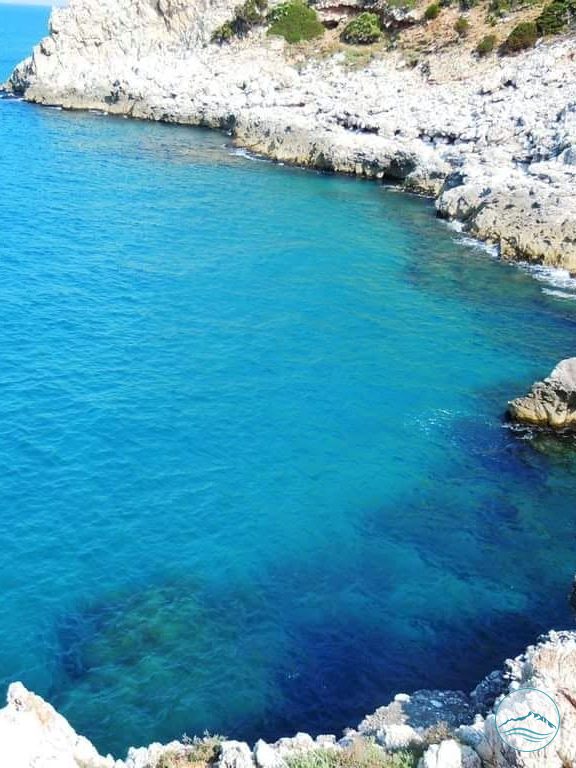
On the southern side of the promontory, Quarto Caldo, is one of the ancient quarries from which Circeo alabaster was extracted, a precious stone with characteristic warm veining.
The Etruscans and Romans already knew the qualities of a precious rock, alabaster, and came to quarry it on the Circeo promontory, as shown by statues and fragments found at various archaeological sites in the area (e.g. the Temple of Jupiter Anxur in Terracina) and in Etruscan tombs. It is likely that Circeo alabaster was used long before Luni marble was introduced into southern Etruria. Leaping forward in time to the late 16th century, while looking for building material for the coastal Towers, this quarry was rediscovered and reused after about a thousand years. The material was immediately used to embellish the Caetani Palace in Cisterna, from the mid-16th century, which was furnished with tables, door jambs and other pieces. After a period of neglect, at the end of the 17th century it was busily reopened, this time at the wish of Duke Francesco Caetani, with the aim of selling the material on the French markets, but unfortunately the deal fell through. Another leap in time takes us to Pius VI, who reopened the quarry to embellish the Vatican sacristy: four columns and the frames of as many as eighteen doors were made of Mount Circeo alabaster.
Alabaster is a precious rock formed by the slow deposition of calcium carbonate, which surfaces in Liassic limestone as stalactites, stalagmites and mammillary concretions. Capponi’s historical book on the Circeo mentions four quarries where this rare stone was extracted: two on the Quarto Caldo side (the Batteria area and Torre Fico), one near Mount Morrone and one in the Monticchio area.
Looking out to sea today, at the edge of the quarry you can clearly see blocks of alabaster, probably loaded here onto ships to take them to the workshops. Of the many ancient quarries, only two sites can be visited today, and this one is the most accessible. Two varieties of alabaster were extracted: the “Ghiaggione” alabaster, from the quarry at the Batterie, and the “Veined Brown” or “Tortoiseshell” alabaster, from the quarry at Guardia Orlando. Splendid veins, filling gaps and cracks in the limestone, are still clearly visible. Circeo alabaster is known in Italy and beyond for its special beauty, and appears, for example, in the catalogue of ancient marbles in Siena (http://www.musnaf.unisi.it). It occurs in parallel veins, with cracks filled by later encrustations that form parallel bands from honey-coloured to dark brown. It is still used today to make various objects, mainly religious items, holy water stoups, statues, ornaments of all kinds, columns and tiles. Cut into slabs about two centimetres thick, it becomes translucent, with a fascinating range of colours, which is why it was used for the large windows of churches and noble palaces, as in the windows of Casamari Abbey (Municipality of Veroli), made with Circeo alabaster.