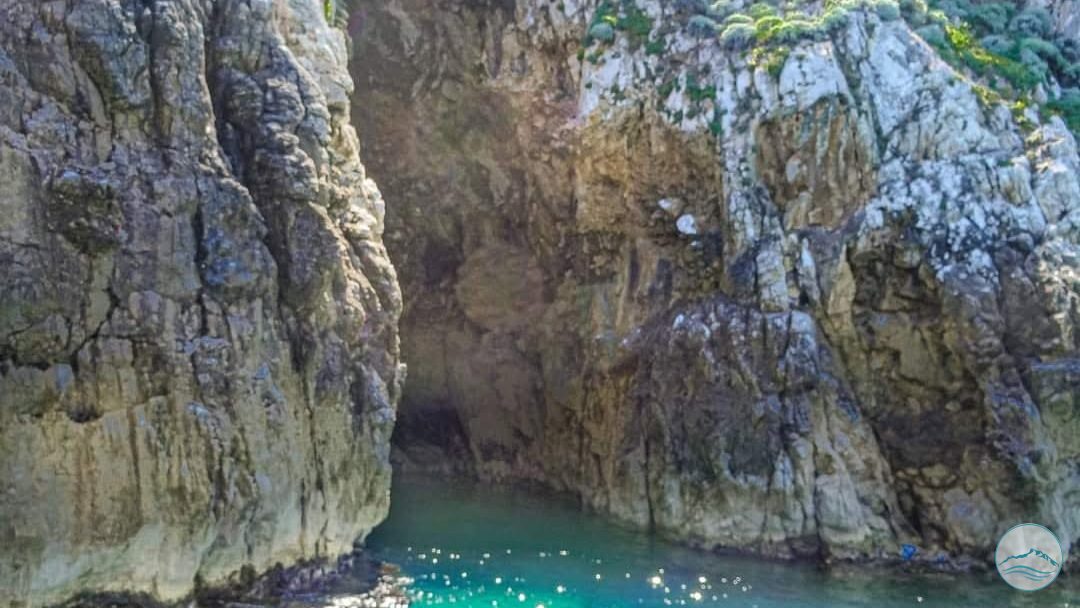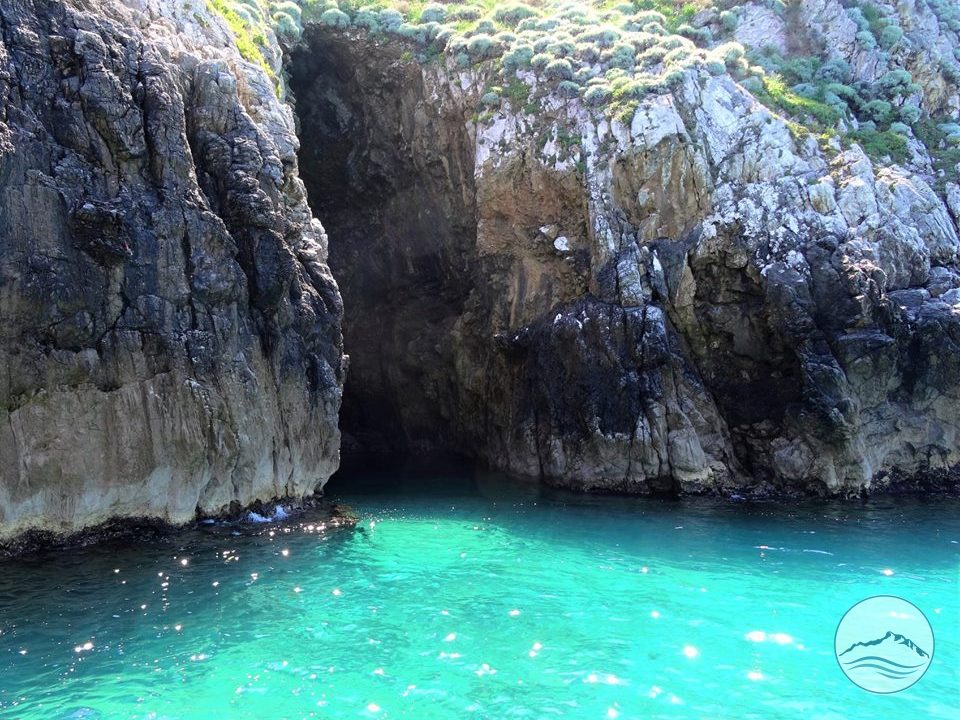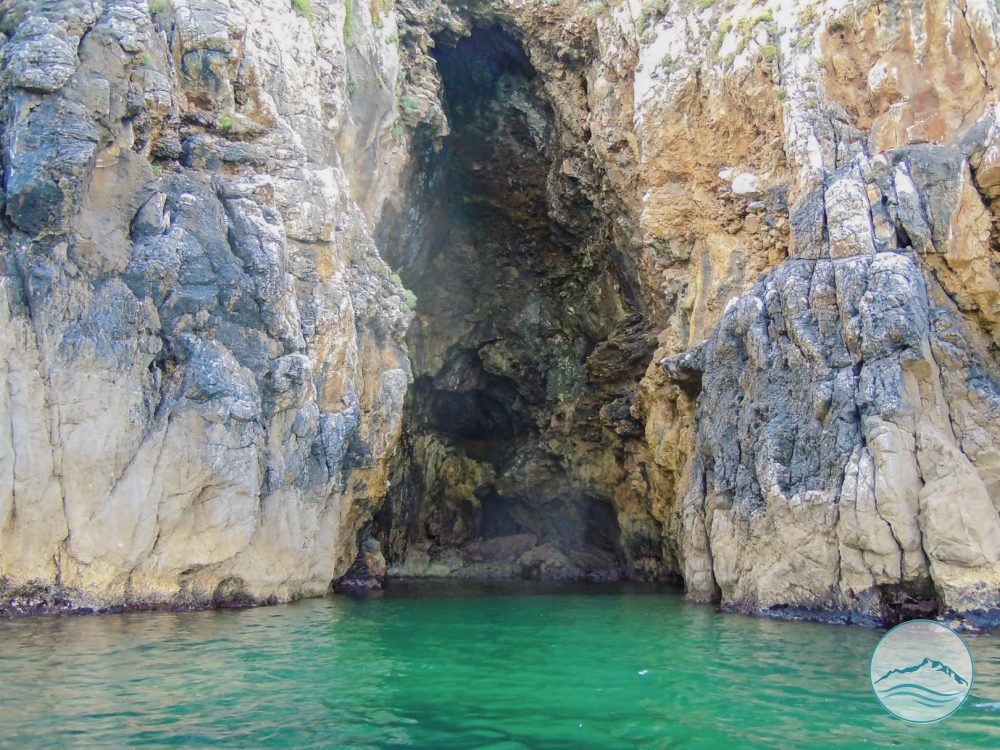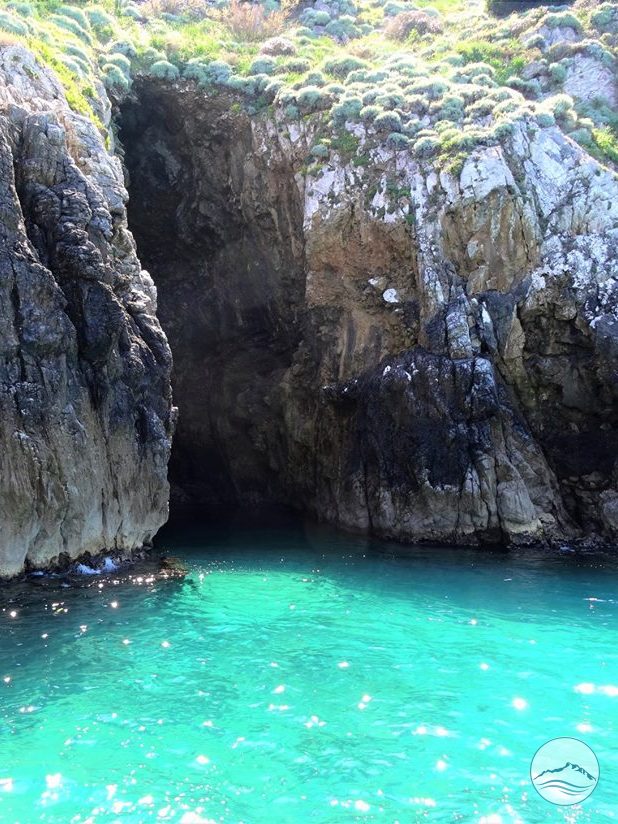
Natural cleft in the limestone near Torre Paola, a karst formation typical of the western side of the Circeo promontory, created over hundreds of thousands of years by the erosive action of water on the rock, the same process that formed the many coastal caves of the area.
Just below the imposing papal tower is the last cavity along the profile of the promontory studied by Professor A. C. Blanc, called the “Grotta spaccata di Paola” (Split Cave of Paola). It is a large chamber about 7 metres wide and 40 high. The name comes from its resemblance to the split mountain of the nearby town of Gaeta.
Inside, a very large chamber (7 metres up) long went unnoticed until it was discovered by chance by a forestry officer, after whom it was named the “Antro Padula”. It is at least 50 metres wide and as many high, with large fallen boulders covering the floor. The interior is very damp, with stalactites and a large colony of bats. Many fragments of amphorae (for oil, water and wine) dating to the Roman Imperial period were found in the chamber. The discovery is thought to have been accidental, as the botanist had entered the well-known Paola cave in search of the rare colony of “Asplenium marinum” (a sea spleenwort fern). The chamber again went unnoticed for over ten years, until it was visited again by the local scholar Tommaso Lanzuisi, who gives a fascinating account of it in his essay “Circeo nella leggenda e nella storia”. He suggests that the cave once had a second, higher entrance, useful to primitive peoples because it was out of reach of wild animals, later blocked when the tower was built.