We are in the saddle between the Monticchio hill and the Guardia Orlando hill. The Etruscans and Romans already knew the qualities of a precious rock, alabaster, and came to quarry it on the Circeo promontory, as shown by statues and fragments found at various archaeological sites in the area (e.g. the Temple of Jupiter Anxur in Terracina) and in Etruscan tombs. Alabaster is a precious rock formed by the slow deposition of calcium carbonate, which surfaces in Liassic limestone as stalactites, stalagmites and mammillary concretions. With such a fine stone available, at the end of the 18th century an experimental school for working alabaster was opened (sadly no longer active), and local writings say it operated until the 1950s. The school was then moved to the Villaggio della Mercede (at Colonia Elena), where it stayed open for about a year, and was then moved again to Latina. Capponi’s historical book on the Circeo mentions four quarries where this rare stone was extracted: two on the Quarto Caldo side (the Batteria area and Torre Fico), one near Mount Morrone and one in the Monticchio area.
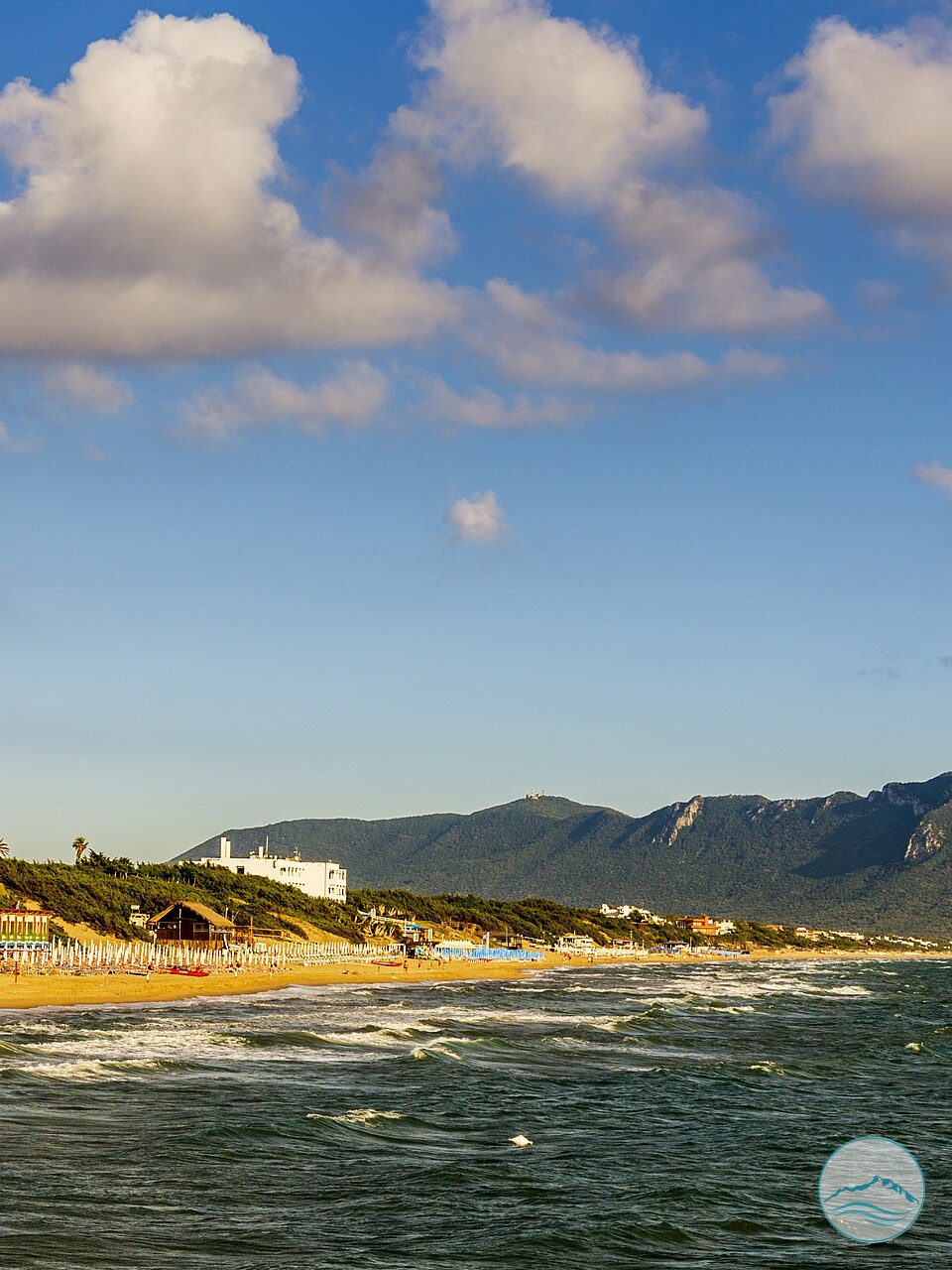
Monticchio Alabaster Quarry
- Period
- From the Etruscans to the 1950s
- Coordinates
- 41.2419, 13.0859
Curiosities
Did you know?
A little gem to share with your travel companions.
Circeo alabaster can be seen in Cisterna di Latina (Caetani Palace and the Old Church), and in Rome in St Peter’s Basilica, the Baptistery of Santa Maria Maggiore and the altar of Santo Spirito in Sassia, as well as in other places we invite you to discover whenever you come across an alabaster ornament or work.
Practical information
Visiting
The site can be reached by car along Via XXIV Maggio, continuing on foot along a path that is currently not easy to use.
Monticchio, via XXIV maggio
Nearby
Other places just a few minutes away.
 Archaeology
Archaic Temple of Monticchio
Several sanctuaries dedicated to different cults stood on the territory of Mount Circeo, some of them frequented for a long time. On the Monticchio hill, on the nort...
Forts
Monticchio Fort
Small fort at Monticchio, on the side of the Circeo promontory, in the same area as the remains of the archaic temple of the same name and one of the historic alabas...
 Quarries
Cava del Brecciaro
At the foot of the northern side of the promontory is the historic Brecciaro Quarry, where the stone and gravel used in the great works of the reclamation of the Agr...
 Forts
Forts
Guardia Orlando
Fortified post on the Circeo promontory, whose name is now also linked to one of the best-known hiking trails in the area, leading to this strategic point overlookin...