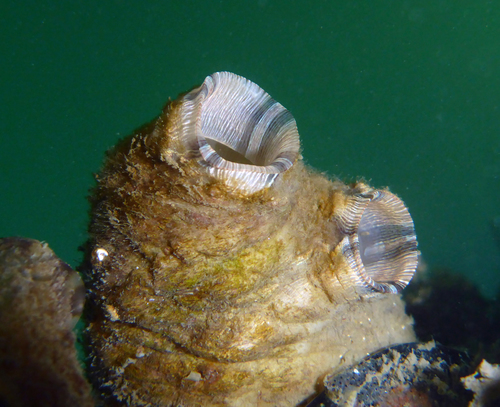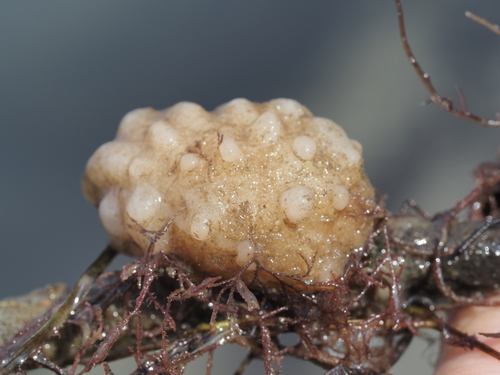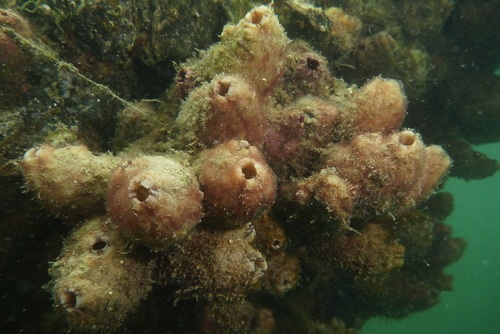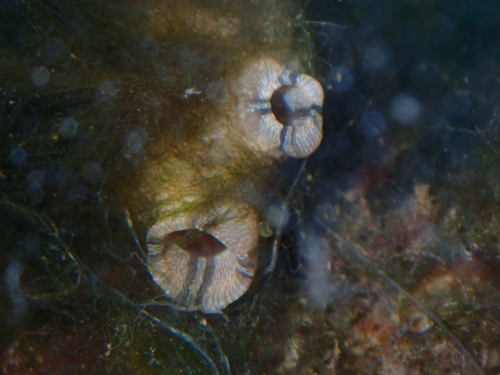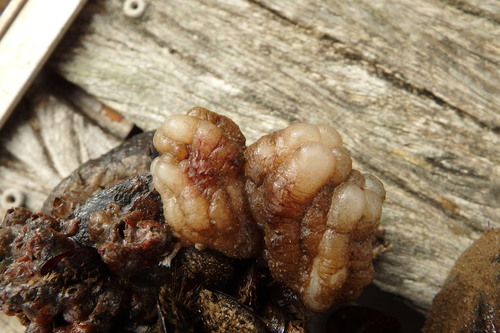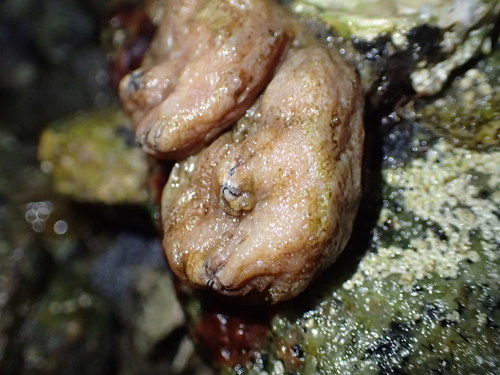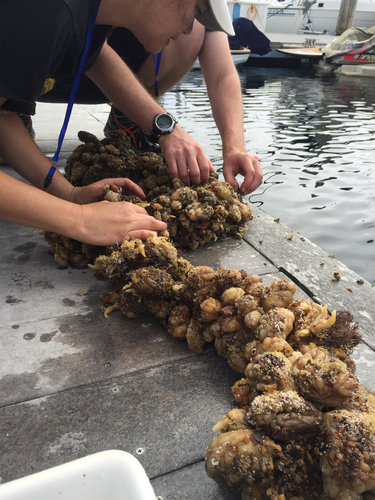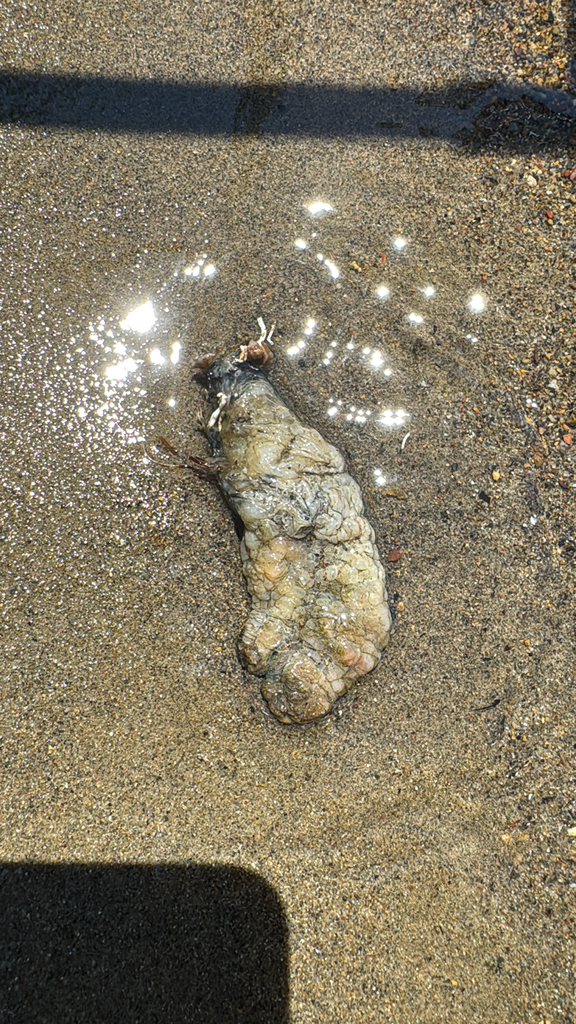
Styela plicata is a tropical to temperate tunicate that has invaded the Gulf of Mexico by hitching a ride on ships' hulls. This sessile filter feeder can expel water when threatened, leading to the name “sea squirt.” This species is rather hardy; “able to tolerate changes in seawater between 10°-30°C and salinites between 22%-34%” (Thiyagarajan & Qian, 2003) as well as pollution and brackish water. This species is difficult to manage because of the large amount...
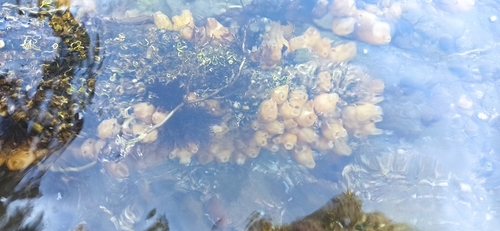
Photo: @beckerj · iNaturalist · CC BY-NC-ND
Pleated Sea Squirt
Styela plicata
- Observations in the area
- 2
- Last sighting
- 30 July 2025
- Category
- Insects and other invertebrates
Species and sighting data come from the iNaturalist platform and may change over time.
Where it has been observed
More photos
Photo: @drakiragavon · iNaturalist · CC BY-NC
Photo: Robin Gwen Agarwal · iNaturalist · CC BY-NC
Photo: Jim Brighton · iNaturalist · CC BY-NC
Photo: Dan Monceaux · iNaturalist · CC BY-NC
Photo: @Shelley · iNaturalist · CC BY-NC
Photo: Duarte Frade · iNaturalist · CC BY
Photo: Alex Bairstow · iNaturalist · CC BY-NC
Photo: Richard Smart (he, him, his) · iNaturalist · CC BY-NC
Other species in the same category
Insects and other invertebrates
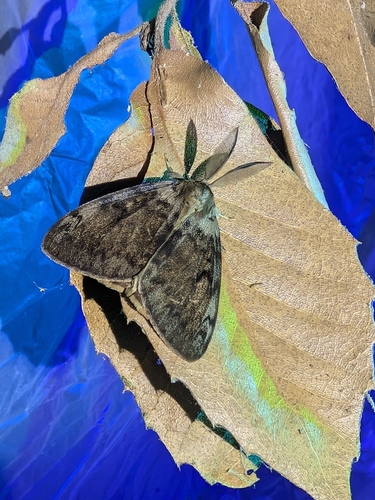
Spongy Moth
Lymantria dispar
22 observations in the area
Photo: @purple-squirrel · iNaturalist · CC BY-NC
Insects and other invertebrates
Atlantic Blue Crab
Callinectes sapidus
21 observations in the area
Photo: @filippo_amatiste · iNaturalist · CC BY-NC
Insects and other invertebrates
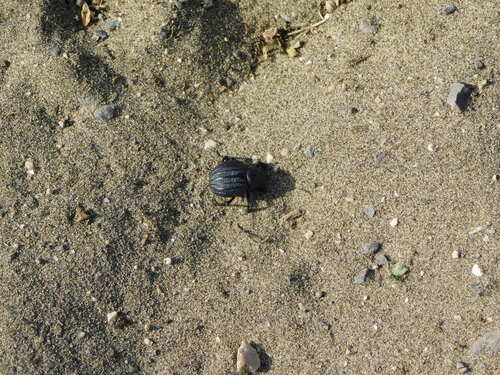
Pimelia bipunctata
17 observations in the area
Photo: @bluehawk314 · iNaturalist · CC BY-NC
Insects and other invertebrates
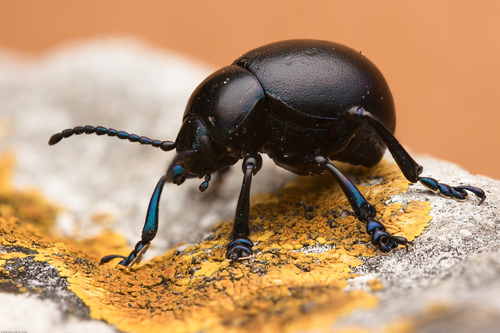
Timarcha nicaeensis
15 observations in the area
Photo: Third Silence · iNaturalist · CC BY-SA
Nature data: iNaturalist
Sighting data also come from open nature platforms and may change over time.