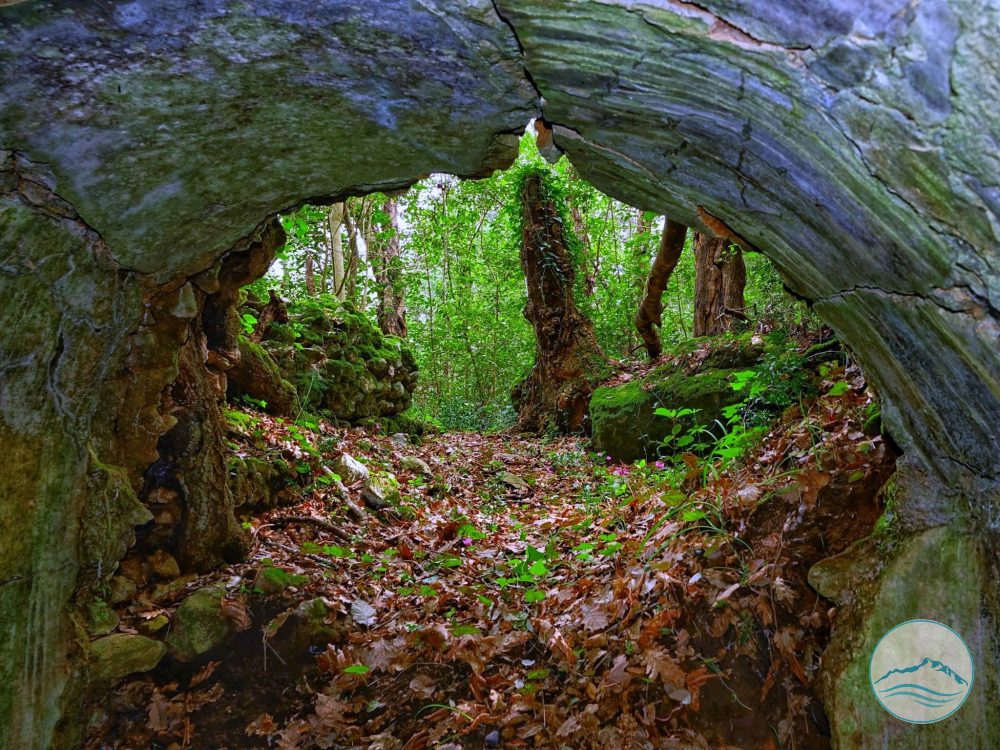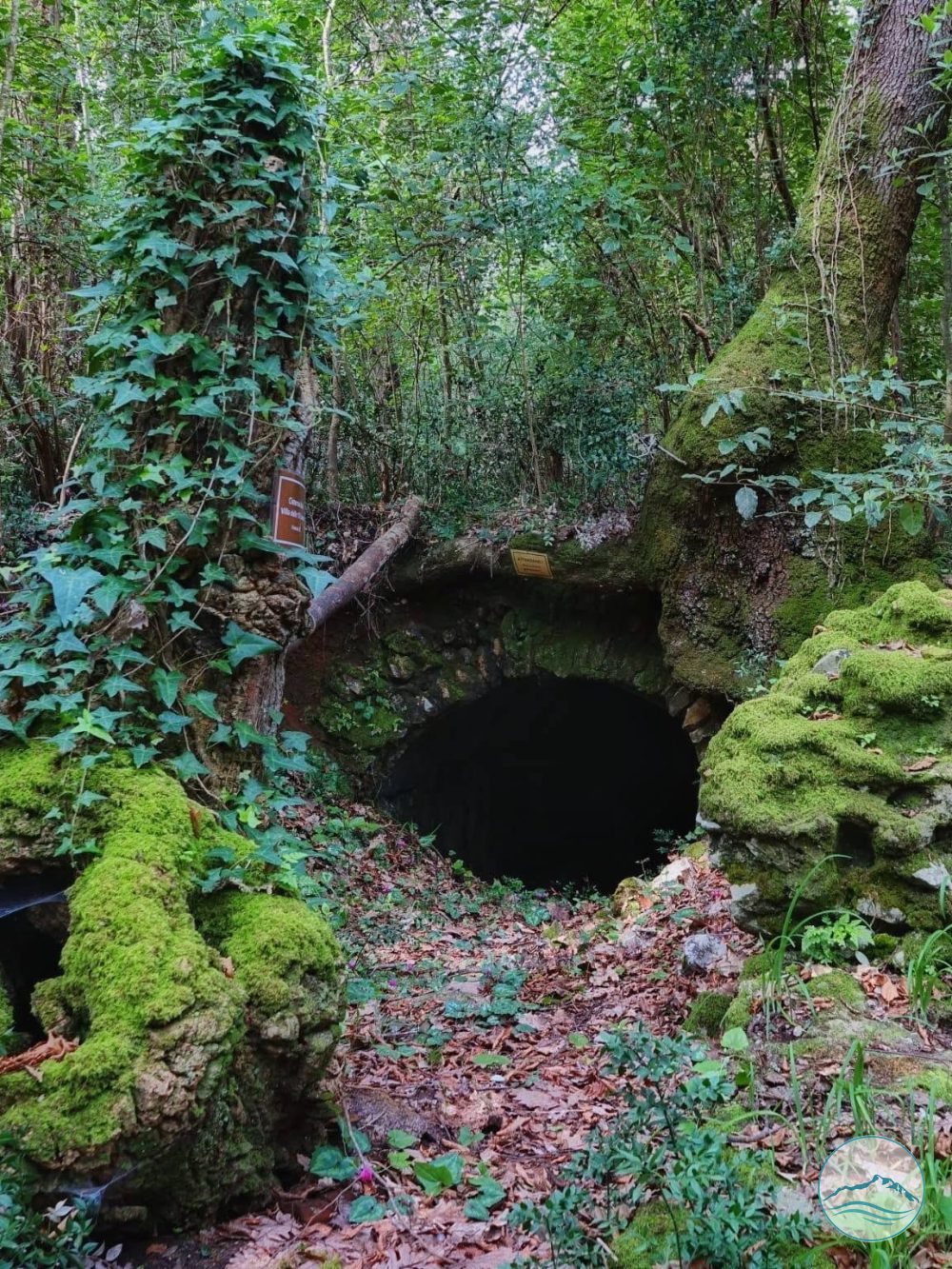
Large Roman cistern divided into ten connected chambers, one of the most imposing and best-preserved surviving water works of the supply system of ancient Circeii. The multi-chamber layout, typical of large Roman cisterns, made it possible to control the settling and distribution of the water collected, ensuring enough reserves to serve the villas and settlements of the promontory even during summer droughts.
Surrounded by the vegetation of the municipal olive grove at Mezzomonte is the so-called “Grotto of the Ten Chambers”. It is in fact a Roman cistern, only part of which can be seen from outside. It consists of two areas covered by true vaults, each divided in turn into five small vaults (overall 25 x 40 metres), creating the ten chambers that give it its name. Of the barrel-vaulted tanks (walls 1.8 metres high) built in concrete, the best-preserved part is a cistern with two parallel chambers in the northern part of the complex. Unfortunately the walls are badly damaged by long cracks. Rainwater was channelled through a small well, still well preserved, in the northern part of the site. The cistern served a Roman villa below, of which only a few traces of the perimeter walls remain.
Time, the weather and the growth of vegetation have caused considerable damage to the structure, so much so that visiting it is dangerous.